

The global financial sector is undergoing a fundamental structural transition toward AI-native financial rails. In these modern environments, artificial intelligence models and autonomous agents are not merely ancillary analytical tools; they are the core processing engines executing sub-millisecond trading strategies, automating credit underwriting, managing high-throughput cross-border settlements, and arbitrating liquidity. However, building financial rails upon autonomous algorithms introduces critical vulnerabilities that legacy cybersecurity models were never designed to defend.
Traditional enterprise security relies on perimeter defense: a trusted internal corporate network shielded by firewalls, VPNs, and static role-based access controls. In an AI-native ecosystem, this model fails catastrophically. Machine learning workloads are dynamic, interconnected, and opaque. Autonomous agents consume untrusted external inputs, execute multi-hop tool integrations, and generate deterministic financial state changes. To safeguard systemic liquidity and institutional assets, engineering teams must transition to Zero-Trust AI Execution Environments. Supernova delivers this foundational blueprint, merging hardware-level isolation, runtime verification, and continuous attestation to secure the next generation of financial rails.
The Structural Failure of Perimeter Defenses in AI Financial Systems
Legacy cybersecurity operates on the assumption of implicit trust once an entity crosses the perimeter. Within an AI pipeline, this paradigm collapses across several key fault lines:
- Dynamic Agent Autonomy: Autonomous financial agents continuously ingest external data, interpret instructions, invoke external APIs, and execute ledger mutations. Because their execution paths are emergent rather than hardcoded, static perimeter rules cannot differentiate between legitimate complex actions and successful adversarial manipulations.
- The Black Box Verification Deficit: Deep neural networks, large language models, and reinforcement learning agents operate via high-dimensional matrix transformations. This inherent opacity makes runtime behavioral anomalies, adversarial weight perturbations, and latent backdoors extraordinarily difficult to detect via traditional signature-based intrusion detection systems.
- Memory-Level Data Exposure: Financial AI models process unencrypted, high-value transaction histories, personally identifiable information, and proprietary trading parameters in runtime memory. Standard server virtualization leaves this memory space exposed to root-level host attacks, hypervisor compromise, and multi-tenant memory dumps.
- Lateral Privileged Movement: When an AI component inside a legacy perimeter is compromised via prompt injection or data poisoning, the implicit trust granted to that internal service enables adversaries to pivot laterally across the core banking ledger or trading core without encountering verification checkpoints.
Core Pillars of Zero-Trust AI Execution Environments
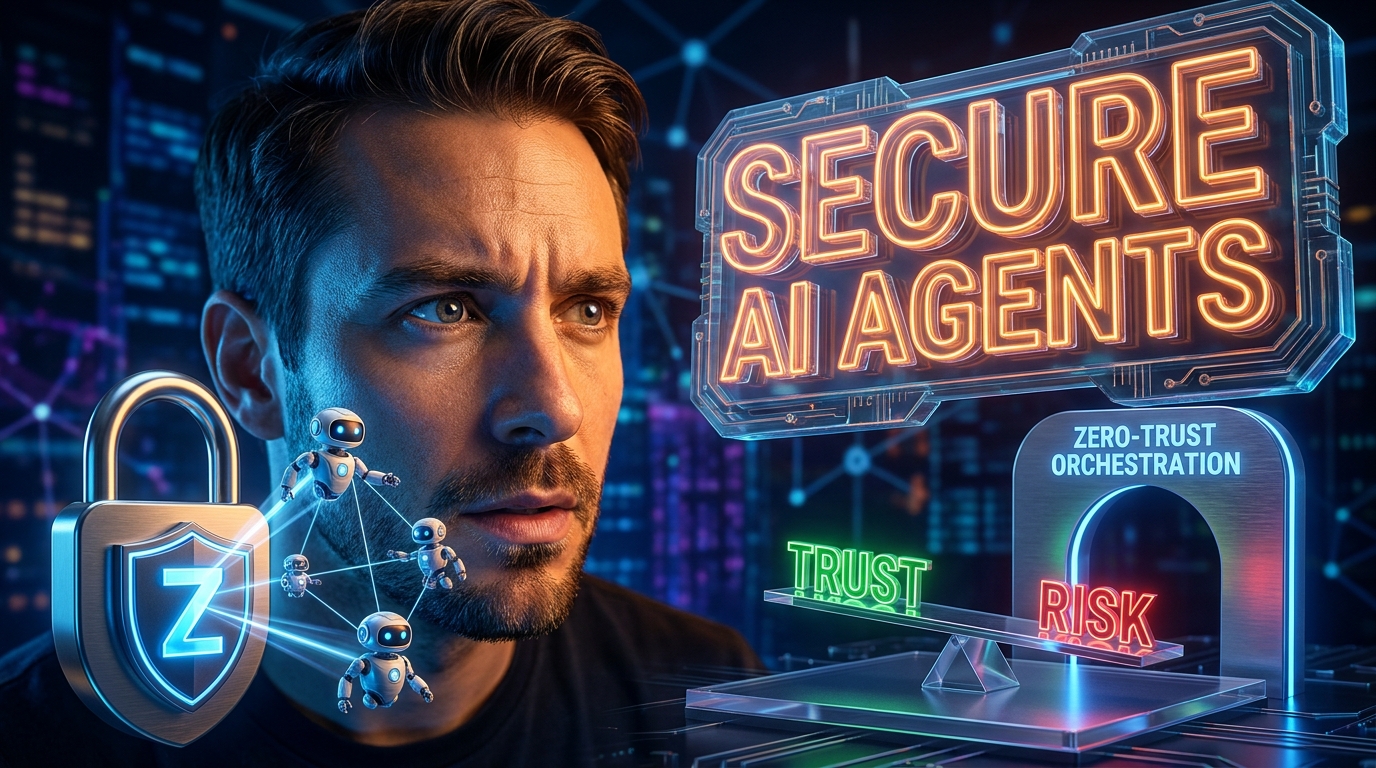
A Zero-Trust AI Execution Environment enforces the principle of never trust, always verify across every layer of the compute stack: from the silicon substrate and hypervisor to the model weights, prompt context, and egress action. Supernova operationalizes this security paradigm through four core architectural pillars.
1. Cryptographic Model Attestation and Weight Integrity
Every model binary, weight tensor, and runtime dependency must be cryptographically signed and continuously attested. Prior to execution, the runtime environment verifies that the model artifact matches its registered cryptographic digest stored on an immutable ledger. This prevents supply-chain attacks where adversarial actors modify model weights or inject backdoor neurons into trading and underwriting models.
2. Confidential Computing via Hardware-Enforced Enclaves
Zero-trust execution requires isolating AI workloads from the underlying infrastructure provider, root administrators, and co-located workloads. Supernova leverages hardware-enforced Trusted Execution Environments (TEEs)—including AMD SEV-SNP, Intel SGX/TDX, and NVIDIA Confidential GPUs. Model execution, tensor math, and inference processing take place inside memory-encrypted enclaves. Even if the host operating system or cloud hypervisor is fully compromised, the financial data and algorithmic logic remain cryptographically sealed.
Test Agent Primitive
See the concepts from this article in action. No login required.
3. Ephemeral Micro-Segmentation and Sandboxed Tool Gating
Autonomous agents operating on financial rails must never possess permanent, broad system credentials. Supernova enforces dynamic, ephemeral micro-segmentation. When an AI agent requires tool access (e.g., executing a SWIFT message, checking clearinghouse collateral, or reading a KYC database), it is issued short-lived, single-use cryptographic tokens. All tool calls execute within micro-sandboxes with deterministic boundary policies, blocking unauthorized egress attempts.
4. Continuous Context-Aware Verification and Real-Time Telemetry
Authentication is not an isolated event; it is an uninterrupted runtime cycle. Every tensor operation, API request, and state modification is evaluated against real-time risk scores, behavioral baselines, and contextual policies. Real-time telemetry inspects inference inputs and outputs for prompt injection signatures, data extraction payloads, and unexpected distribution drift, terminating compromised execution contexts instantaneously.
Architectural Comparison: Legacy vs. Supernova Zero-Trust AI Rails
The operational divide between legacy financial architecture and Supernova's zero-trust AI infrastructure defines the difference between systemic vulnerability and cryptographic resilience:
| Architectural Dimension | Legacy Financial Infrastructure | Supernova Zero-Trust AI Rails |
|---|---|---|
| Trust Boundary | Perimeter-based (internal network is trusted). | Zero implicit trust (per-token, per-inference verification). |
| Memory Protection | Unencrypted plaintext memory during runtime. | Hardware-enforced Confidential Computing (TEEs). |
| Model Verification | Static file storage checks; no runtime attestation. | Cryptographic weight attestation & deterministic builds. |
| Agent Execution | Broad service account permissions. | Ephemeral, single-use scoped tokens & sandboxing. |
| Threat Mitigation | Post-incident log analysis & static WAF rules. | Deterministic runtime guardrails & hardware isolation. |
| Auditability | Mutable system logs vulnerable to tampering. | Immutable, cryptographically verifiable telemetry rails. |
Implementing the Supernova Blueprint for Financial Rails
Deploying Supernova within institutional financial architecture establishes end-to-end security for automated workflows. The blueprint operates across three distinct operational layers:
1. The Ingestion and Pre-Execution Quarantine Layer
External payloads—such as real-time market data feeds, multi-party transaction requests, and unstructured user instructions—first land within an isolated ingestion quarantine. Supernova's deterministic sanitizers scrub inputs for indirect prompt injections, out-of-distribution adversarial noise, and malformed structures before forwarding the payload to the execution environment.
2. The Attested Confidential Execution Layer
The AI model loads inside an attested hardware enclave. The enclave generates a hardware-signed remote attestation report proving that the exact target model and verified software stack are running on genuine, secure silicon. Decryption keys for proprietary model weights and sensitive financial inputs are released exclusively to the verified enclave, executing the inference computation in absolute hardware isolation.
3. The Deterministic Policy and Settlement Egress Layer
Once the model computes its decision, the output is passed to an automated policy engine. If an autonomous agent requests a fund transfer, liquidity reallocation, or smart contract invocation, the transaction is validated against formal deterministic constraints (such as liquidity thresholds, velocity caps, and regulatory sanctions checks). Only valid, cryptographically signed instructions are permitted to egress to core settlement ledgers.
Regulatory Harmonization: DORA, EU AI Act, and Beyond
Modern financial institutions operate within an increasingly strict global regulatory environment. Adopting Zero-Trust AI Execution Environments provides the technical architecture necessary to satisfy major legal and compliance frameworks:
- EU Artificial Intelligence Act (Article 15): High-risk AI systems must achieve appropriate levels of accuracy, robustness, and cybersecurity. Supernova's hardware enclaves and attestation pipelines provide technical resilience against adversarial feedback loops, data poisoning, and unauthorized system alterations.
- Digital Operational Resilience Act (DORA): DORA requires financial entities across the European Union to implement continuous ICT risk management, rigorous data protection in transit and at rest, and robust business continuity. Supernova's enclave architecture eliminates single points of hypervisor failure and enforces end-to-end encryption for data in use.
- Global Financial Governance (SOC 2, SEC, BIS): Supernova's immutable audit trails guarantee that every automated decision is traceable to a specific verified model version, exact input context, and authenticated execution timestamp, simplifying institutional audits and forensic investigations.
The Strategic Imperative for Institutional Resilience
As the velocity of global capital accelerates, financial rails will increasingly be driven by autonomous AI systems operating at machine speed. Treating security as a perimeter layer or an afterthought creates unacceptable systemic risk. Supernova's Zero-Trust AI Execution Environments provide the necessary engineering foundation to deploy high-throughput, autonomous financial intelligence with mathematical certainty, cryptographic confidentiality, and regulatory compliance.
Ready to Build?
Stop guessing. Start building. Every new account gets 1,000 NOVA credits instantly upon login to test the registry and route intents.
Claim 1,000 Credits →